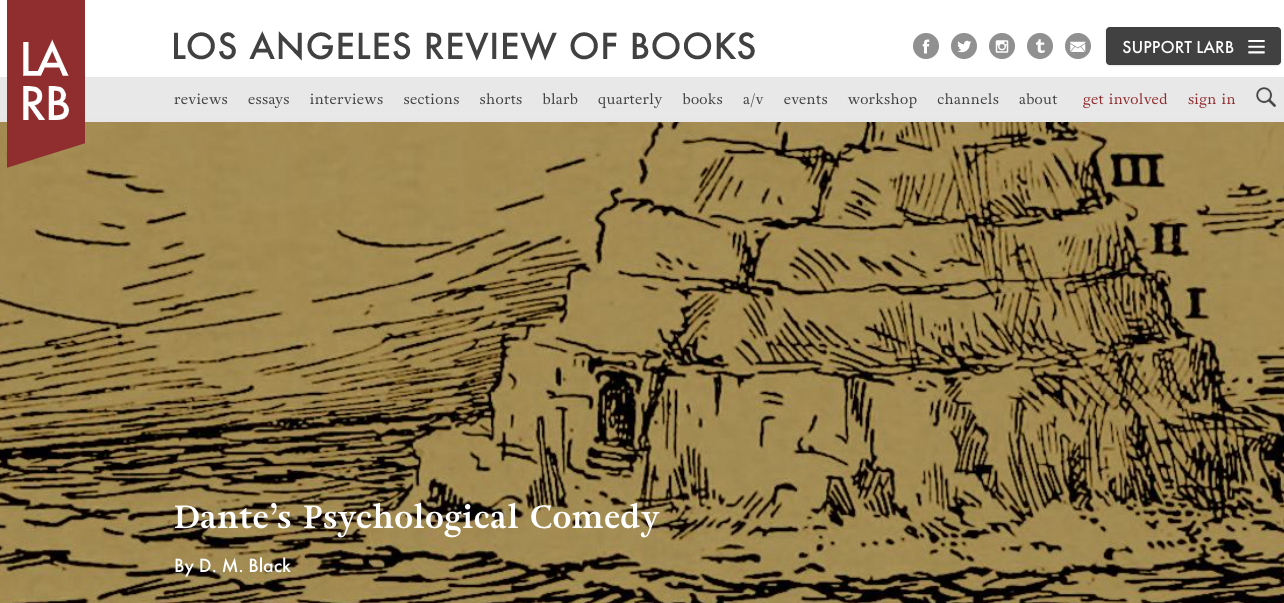
D. M. Black, “Dante’s Psychological Comedy” (2019)
[…] “My own background is in psychoanalysis, and I have recently translated the Purgatorio in an attempt to get as close as possible to the actual movement of Dante’s thought. It is ‘a psychology’ in a certain sense, but not a precursor of the modern science. It differs from what we think of as science in at least two respects — first, because the ethical criteria used are derived from religion, and second, and perhaps more fundamentally, because the world Dante describes is not one of objects to be studied dispassionately, but one of subjects, each with their own point of view, and all seeking happiness and succeeding or, devastatingly, failing to achieve it. This ‘world of subjects’ is what is meant by saying ‘allegory.’ Dante in the poem is not testing out the truth of some hypothesis; he is discovering, with sympathy, distress, joy, or outrage, how life works out for actual, various people. (Almost all the people he meets are actual historical figures, very often people he has known personally.) […]” –D. M. Black, Los Angeles Review of Books, July 7, 2019Sighting Citation:
“D. M. Black, “Dante’s Psychological Comedy” (2019).” Dante Today: Citings and Sightings of Dante’s Works in Contemporary Culture. Elizabeth Coggeshall and Arielle Saiber, eds. July 17, 2019. https://www.dantetoday.org/sightings/d-m-black-dantes-psychological-comedy-2019/.
Posted July 17, 2019